How To Identify Synthetic Nicotine: Analytical Methods And Source Verification
Leave a message

Synthetic nicotine and tobacco-derived nicotine can contain exactly the same nicotine molecule, making their identification an interesting challenge in analytical chemistry.
For laboratories, chemical manufacturers, regulators, and international raw-material buyers, verifying nicotine origin is important when assessing material authenticity, supplier declarations, and regulatory documentation.
However, identifying synthetic nicotine is not as simple as measuring nicotine concentration or examining a Certificate of Analysis (COA).
Modern scientific research has explored several analytical approaches, including radiocarbon analysis, chiral chromatography, stable isotope measurements, and chemical impurity profiling.
Each method provides different information, and no single measurement should be treated as universally conclusive without considering the material's manufacturing history.
This guide explains the science behind synthetic nicotine identification, the major testing technologies, and the limitations that laboratories should consider.
Why Is Synthetic Nicotine Difficult to Identify?
Synthetic nicotine is manufactured through chemical processes, while tobacco-derived nicotine is obtained from tobacco plants.
Despite their different origins, both materials can contain the same nicotine molecule.
Nicotine has the molecular formula C10H14N2 and a molecular weight of approximately 162.23 g/mol.
Its molecular structure contains a pyridine ring and a pyrrolidine ring.
When both materials contain the same stereochemical form, their molecular structures are identical.
For example, synthetic (S)-nicotine and tobacco-derived (S)-nicotine cannot be distinguished solely by their molecular formula.
Conventional analytical methods can identify nicotine and measure its concentration, but they may not reveal whether the molecule was originally obtained through plant extraction or chemical synthesis.
This creates a need for specialized source-verification techniques.
What Is Nicotine Source Authentication?
Nicotine source authentication is the scientific assessment of whether a nicotine material originated from tobacco plants, chemical synthesis, or potentially a combination of sources.
The objective differs from routine purity testing.
Purity testing asks:
How much nicotine is present, and what other substances are in the material?
Source authentication asks:
Where did the nicotine come from?
These are related but separate questions.
A material can contain highly purified nicotine while still requiring additional analysis to verify its stated origin.
Source authentication may consider:
Carbon isotope composition.
Hydrogen and other stable isotope signatures.
Nicotine enantiomeric composition.
Characteristic impurity patterns.
Manufacturing documentation and traceability.
The reliability of the conclusion depends on the available evidence and the scope of the analytical methods.
Method 1: Carbon-14 Analysis for Nicotine Identification
Radiocarbon analysis is one of the most significant techniques investigated for distinguishing tobacco-derived nicotine from certain types of synthetic nicotine.
What Is Carbon-14?
Carbon-14, written as 14C, is a radioactive isotope of carbon.
It occurs naturally in the environment and is incorporated into living organisms through the carbon cycle.
Plants absorb carbon derived from atmospheric carbon dioxide during photosynthesis.
As a result, recently grown biological materials generally contain measurable amounts of contemporary radiocarbon.
Fossil-derived feedstocks, by contrast, contain very little measurable carbon-14 because of radioactive decay over geological timescales.
This difference provides the scientific basis for radiocarbon-based source analysis.
How Does Carbon-14 Help Identify Nicotine?
Tobacco-derived nicotine originates from plant material and therefore contains carbon associated with relatively recent biological activity.
Synthetic nicotine may be manufactured using chemical starting materials derived partly or entirely from fossil sources.
When this happens, the resulting nicotine can exhibit a different radiocarbon signature.
A peer-reviewed study published in PLOS ONE in 2022 investigated the differentiation of synthetic and tobacco-derived nicotine using multiple analytical techniques.
The researchers found that radiocarbon analysis successfully distinguished the source categories represented by all the samples in that investigation.
The tobacco-derived nicotine samples had approximately 100% modern carbon, while the tested synthetic nicotine samples had substantially lower modern-carbon values.
Important Limitations
Radiocarbon results do not automatically identify every possible synthetic nicotine product.
A synthetic material manufactured using bio-based chemical feedstocks may have a different radiocarbon profile from a synthetic material produced using fossil-derived starting materials.
Therefore, a radiocarbon measurement primarily provides information about carbon origin.
Its interpretation as evidence of nicotine manufacturing origin requires an understanding of the relevant production route.
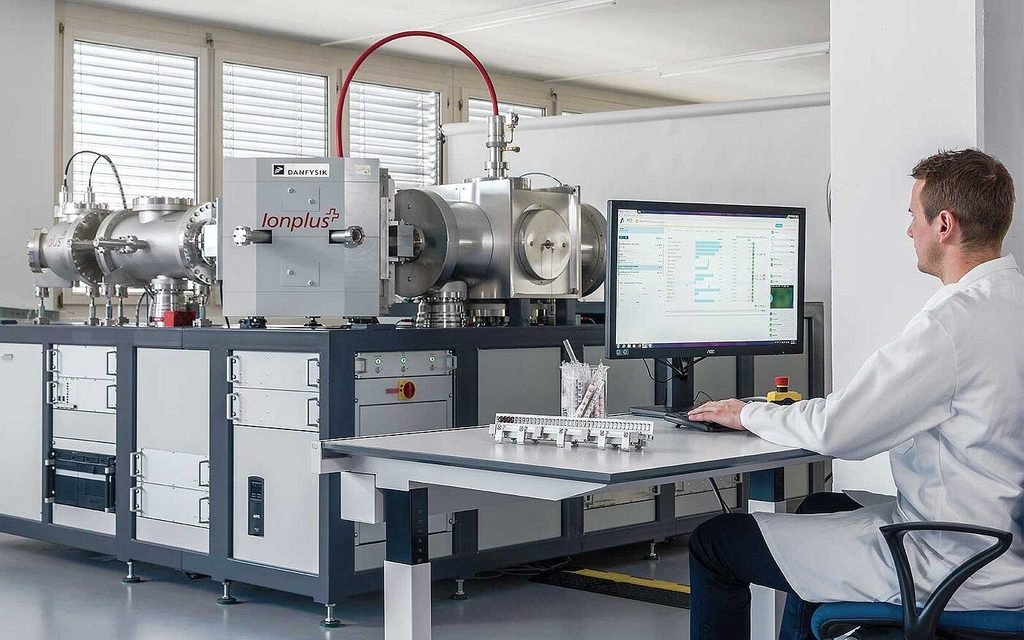
Method 2: Accelerator Mass Spectrometry
Accelerator Mass Spectrometry, or AMS, is an analytical technology capable of measuring very low abundances of certain isotopes, including carbon-14.
AMS has applications in radiocarbon dating, environmental science, biological research, and material authenticity investigations.
In nicotine source analysis, AMS can be used to characterize the radiocarbon content of an appropriately prepared sample.
What Information Does AMS Provide?
AMS-based radiocarbon analysis can provide information about the proportion of modern carbon present in a sample.
This may help researchers determine whether the material contains carbon from recent biological sources or older fossil sources.
However, AMS does not inherently identify nicotine molecules separately from other carbon-containing compounds in a mixture.
For a formulated product containing multiple organic substances, laboratories must ensure that the measurement represents the intended analyte rather than unrelated formulation ingredients.
Why Is This Important?
A finished product can contain numerous carbon-containing materials.
If a laboratory measures the total radiocarbon content of an untreated complex mixture, the result may reflect several ingredients rather than nicotine alone.
Consequently, analytical selectivity and suitable sample preparation are important to interpreting the findings.
The analytical approach should be developed and validated by qualified laboratories.
Method 3: Chiral Analysis of Nicotine
Chiral analysis examines the stereochemical composition of a compound.
Nicotine contains a chiral center and can exist as two enantiomers:
(S)-nicotine
(R)-nicotine
These molecules are mirror images of one another.
Why Is Chirality Relevant?
Naturally occurring nicotine in tobacco is predominantly the (S)-form.
Some synthetic nicotine manufacturing approaches produce materials containing substantial amounts of both enantiomers.
Therefore, identifying a significant (R)-nicotine proportion can provide useful information when investigating a material's manufacturing origin.
Analytical Techniques
Chiral chromatography and other specialized analytical approaches may be used to measure the relative proportions of nicotine enantiomers.
The test results can support an assessment of stereochemical composition.
Limitations of Chiral Analysis
A highly (S)-enriched synthetic nicotine sample may have an enantiomeric composition closely resembling tobacco-derived nicotine.
In this situation, chiral analysis alone may be unable to establish the material's source.
Therefore, the absence of a substantial (R)-nicotine fraction should not be interpreted as proof of tobacco origin.
Method 4: Chemical Impurity Profiling
Manufacturing processes may leave characteristic chemical impurities.
The identity and quantity of these compounds can sometimes provide information about the history of a material.
Tobacco-Associated Impurities
Tobacco-derived nicotine may contain minor chemical constituents associated with the original plant material or its processing.
Depending on purification effectiveness, these may include related alkaloids and other trace constituents.
Synthetic Process Impurities
Synthetic nicotine may contain impurities associated with the selected manufacturing route.
These could include certain process-related byproducts or residual compounds.
Analytical Techniques
Laboratories may use:
Gas chromatography-mass spectrometry (GC-MS).
Liquid chromatography-mass spectrometry (LC-MS).
High-performance liquid chromatography (HPLC).
Other validated analytical methods.
These technologies can help characterize suitable chemical constituents.
Why Impurity Profiling Is Not Always Conclusive
Modern purification technologies can significantly reduce impurities in both synthetic and tobacco-derived nicotine.
Furthermore, certain impurities may appear in more than one source category.
The absence of a particular impurity therefore does not prove manufacturing origin.
Impurity profiling is most useful when interpreted alongside other evidence.
Method 5: Stable Isotope Analysis
Stable isotope analysis is another approach to investigating the origin of chemical materials.
Unlike carbon-14, stable isotopes do not undergo radioactive decay.
Their relative abundances can vary with biological, geographical, and industrial factors.
Relevant isotope systems may include:
Hydrogen isotopes.
Carbon isotopes.
Nitrogen isotopes.
How Can Stable Isotopes Help?
Plants growing under different environmental conditions can exhibit different isotope signatures.
Chemical production processes and feedstock origins can also influence isotopic composition.
A study published in Rapid Communications in Mass Spectrometry investigated stable isotope characterization for identifying nicotine origin.
The researchers analyzed hydrogen, carbon, and nitrogen isotope signatures and reported that hydrogen isotope measurements could be informative for differentiating the particular nicotine source categories investigated.
Limitations
Stable isotope composition can vary according to the source of starting materials and environmental conditions.
An isotope threshold established in one dataset should not automatically be treated as universal across all manufacturers and regions.
Laboratories should use appropriate reference materials, validated methods, and scientifically justified interpretation criteria.
Comparison of Synthetic Nicotine Identification Methods
The following table summarizes the main approaches.
| Analytical Method | Information Provided | Main Limitation |
|---|---|---|
| Carbon-14 analysis | Modern vs. fossil carbon contribution | Depends on feedstock origin |
| AMS | Highly sensitive radiocarbon measurement | Requires suitable analyte-specific preparation |
| Chiral chromatography | S/R nicotine composition | Cannot always distinguish highly S-enriched synthetic nicotine |
| GC-MS | Selected chemical impurities | Impurity patterns may overlap |
| LC-MS | Selected trace constituents | Source attribution may remain uncertain |
| Stable isotope analysis | Isotopic composition and possible origin signatures | Geographic and manufacturing variability |
Because AMS is a measurement technology commonly used for radiocarbon analysis, it is not a completely separate source-identification principle from carbon-14 testing.
The choice of testing approach should depend on the specific question being investigated.
Can a Certificate of Analysis Prove Nicotine Origin?
A Certificate of Analysis provides selected analytical information about a material.
However, a standard COA generally does not prove whether the nicotine was chemically synthesized or extracted from tobacco.
For example, a COA reporting high nicotine assay purity establishes neither the source of the carbon atoms nor the manufacturing origin.
Source authentication may require additional evidence.
Relevant information can include:
Supplier manufacturing declarations.
Raw-material traceability records.
Appropriate source-specific laboratory analysis.
Independent analytical verification.
Quality-management documentation.
Buyers should distinguish between a supplier's written origin claim and scientific evidence supporting that claim.
Why Does Source Verification Matter for B2B Procurement?
International chemical procurement requires accurate material identification and reliable documentation.
For synthetic nicotine, source verification may be relevant to supplier qualification, contractual specifications, product labeling, and regulatory assessment.
Supplier Transparency
Clear information about manufacturing origin supports more reliable commercial communication.
Technical Documentation
Appropriate analytical records can help buyers assess whether materials conform to agreed specifications.
Regulatory Evaluation
Regulatory requirements may depend on product category and jurisdiction.
In the United States, FDA authority extends to tobacco products containing nicotine from any source, including synthetic nicotine.
Therefore, source verification does not eliminate the need to comply with applicable regulatory obligations.
Quality Assurance
Source authentication complements, rather than replaces, traditional chemical quality-control testing.
Identity, concentration, impurity composition, and batch consistency remain important regardless of how nicotine was manufactured.
Scientific Limitations and Future Research
Scientific progress has improved the ability to characterize nicotine origin.
However, source authentication remains a complex analytical problem.
Several factors can affect test interpretation:
Feedstock variation
Synthetic processes may use starting materials with different biological or fossil carbon origins.
High-purity materials
Extensive purification can reduce characteristic impurity markers.
Stereochemical similarity
Highly (S)-enriched synthetic nicotine may resemble tobacco-derived nicotine in chiral analytical testing.
Complex formulations
Finished products may contain numerous compounds that complicate source-specific analysis.
Method validation
Analytical techniques must be evaluated for the intended sample type and decision criteria.
Future research may improve the integration of isotopic, chromatographic, and spectroscopic information.
For now, reliable nicotine source verification should rely on scientifically appropriate evidence rather than a single simplistic test result.
Frequently Asked Questions
1. How can you identify synthetic nicotine?
Synthetic nicotine can be investigated using analytical methods such as radiocarbon testing, chiral chromatography, stable isotope analysis, and impurity profiling. The reliability of identification depends on the manufacturing source and the evidence available.
2. Can carbon-14 testing distinguish synthetic nicotine from tobacco-derived nicotine?
Carbon-14 testing can distinguish tobacco-derived nicotine from certain synthetic nicotine materials, particularly when the synthetic material contains fossil-derived carbon. However, results require careful interpretation if bio-based starting materials are involved.
3. Is synthetic nicotine chemically different from natural nicotine?
Synthetic and tobacco-derived nicotine can contain chemically identical molecules. Differences may exist in enantiomeric composition, impurity profiles, and manufacturing origin.
4. Can HPLC prove that nicotine is synthetic?
Routine HPLC testing can measure nicotine and selected impurities, but it does not necessarily establish manufacturing origin. Specialized chiral methods provide additional information but may still be inconclusive.
5. What is the most useful analytical method for nicotine source authentication?
Radiocarbon analysis has shown strong differentiation capabilities in published research involving fossil-derived synthetic nicotine. However, no single approach should be assumed to identify every possible synthetic production route.
6. Can laboratories distinguish a mixture of synthetic and tobacco-derived nicotine?
Isotopic measurements may provide evidence suggesting mixed carbon origins under suitable conditions. However, determining exact proportions is more complex and depends on the source characteristics and analytical model.
7. Does a high-purity nicotine COA establish its source?
No. A high-purity assay does not establish manufacturing origin. Additional source-specific testing and supporting documentation may be needed.
8. Why is nicotine origin verification important?
It can support supplier qualification, material traceability, scientific characterization, product documentation, and regulatory assessments.
Conclusion
Identifying synthetic nicotine requires more than confirming the presence of nicotine or measuring its purity.
Because chemically synthesized and tobacco-derived nicotine can contain identical molecules, source verification often requires specialized analytical techniques.
Radiocarbon analysis, stable isotope measurements, chiral chromatography, and impurity profiling each contribute different types of evidence.
Among these approaches, radiocarbon analysis has demonstrated particularly useful results for distinguishing tobacco-derived nicotine from synthetic nicotine produced using fossil-derived feedstocks.
However, manufacturing differences, bio-based feedstocks, and complex formulations can limit general conclusions.
For laboratories, chemical manufacturers, and international buyers, the most reliable approach combines appropriate analytical testing, documented material traceability, and scientifically justified interpretation.
Explore More Nicotine Chemistry Resources
Read our related articles on synthetic nicotine manufacturing, nicotine purity testing, chemical impurity analysis, and the differences between synthetic and tobacco-derived nicotine.
Disclaimer: This article is intended for scientific and industrial education. It does not constitute regulatory authorization, legal advice, or chemical manufacturing instructions. Nicotine is toxic and addictive.